
Top 10 Types of Chemical Heating Systems?

Chemical Heating is central to many chemical plants, where stable temperatures influence reaction rates, product quality, and equipment safety. The U.S. Department of Energy’s Improving Process Heating System Performance: A Sourcebook for Industry reports that process heating represents roughly two-thirds of manufacturing energy use. That scale makes heating choices more than a utility decision. They affect operating costs, emissions, maintenance, and the reliability of production lines.

This overview introduces ten common system types, including steam, fired heaters, electric resistance, induction, infrared, and thermal-fluid systems. It also considers heat pumps and heat recovery, which can improve efficiency when operating conditions allow. The International Energy Agency’s The Future of Petrochemicals (2018) identifies petrochemicals as a significant and growing source of energy demand. Its findings reinforce the value of examining how heat is generated and used across chemical processes.

No single system is best for every plant. A reactor needing precise temperature control has different needs from a drying line or large storage tank. Site utilities, process temperatures, materials, maintenance skills, and heat-transfer limits all matter. Small details count. A poorly matched pump or insulated pipe can undermine an otherwise efficient design. This list is a starting point, not a substitute for engineering review. Some comparisons remain imperfect because published performance figures often depend on different process conditions and system boundaries. The following sections explain the main options and the practical trade-offs behind them.
Top 10 Types of Chemical Heating Systems?

How Chemical Heating Systems Generate and Transfer Heat

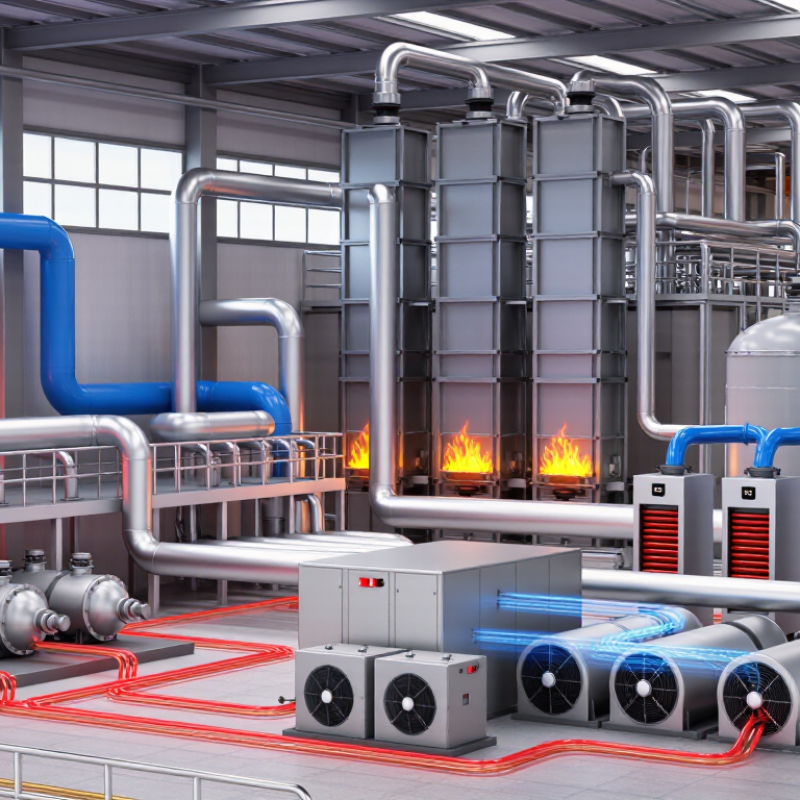
Chemical heating systems convert chemical energy into useful heat, usually through fuel combustion or controlled exothermic reactions. A burner releases heat inside a chamber; catalytic heaters encourage oxidation without a visible flame. In process equipment, a reaction itself may produce heat that operators capture instead of wasting. The design depends on the required temperature, fuel, changing load, and material being heated. That sounds simple.

Generated heat moves through conduction, convection, and sometimes radiation. A boiler transfers energy through metal tubes into water, producing steam or hot water for circulation. Thermal-fluid heaters warm oil in a closed loop, and pumps carry it to jackets, coils, or heat exchangers. There, heat crosses a metal surface into another fluid or product without the streams mixing. Air heaters instead move warmed air through ducts or across equipment.

Insulation reduces heat loss, while sensors track temperature and flow. Still, one sensor can miss a local hot spot. Deposits on tubes can act like a thin blanket, raising energy use and slowing heat transfer. Maintenance records help reveal this gradual drift. A heater may appear to run steadily while poor flow limits how much heat reaches the process.

Key Components and Operating Principles

Chemical heating systems share a practical core: a heat source, transfer surface, circulation path, sensors, and safety controls. A burner heats a furnace or fluid; electric elements convert current directly into heat. Steam and thermal-oil loops carry energy through pipes to vessel jackets or coils. Heat exchangers keep process fluids separate while transferring energy across metal plates or tubes. Pumps, expansion tanks, insulation, and pressure-relief devices support stable operation. The U.S. Department of Energy’s 2016 process-heating sourcebook estimates annual U.S. process-heating use at about 2.3 quadrillion Btu. That scale makes even modest heat losses worth investigating.

Operating principles differ by system. In a jacketed reactor, hot fluid surrounds the vessel and transfers heat through its wall. A control loop compares sensor readings with the setpoint, then adjusts fuel, power, or flow. For a viscous batch, slow circulation can leave hot spots near the inlet and cooler material elsewhere. Not always obvious. Operators should check sensor placement, insulation condition, and flow balance under real production loads. DOE’s sourcebook also identifies waste-heat recovery as an efficiency opportunity; however, recovered heat is useful only when its temperature and timing match demand. A tidy diagram rarely shows fouled surfaces, drifting sensors, or changing batch recipes. Those details matter.

Top 10 Types of Chemical Heating Systems: Key Components and Operating Principles

Indicative process-temperature ranges (°C). Actual operating limits depend on pressure, materials, system design, and the process.

Key components and operating principles
  • Steam: boiler, control valve, heat exchanger or coil, and condensate return; condensing steam transfers latent heat.
  • Pressurized hot water: heater, pump, expansion vessel, and heat exchanger; circulating water transfers sensible heat.
  • Thermal oil: heater, circulation pump, expansion tank, and exchanger; hot oil carries heat around a closed loop.
  • Direct-fired heater: burner, radiant/convection sections, and process coils; combustion gases heat the process fluid.
  • Electric resistance: heating elements, power controls, and temperature sensors; electrical resistance generates heat directly.
  • Infrared radiant: radiant emitters, reflectors, and controls; emitted radiation heats exposed surfaces.
  • Industrial heat pump: evaporator, compressor, condenser, and expansion device; a refrigeration cycle upgrades low-grade heat.
  • Waste-heat recovery: heat exchanger, ducting or piping, and controls; heat from an exhaust or process stream is reused.
  • Solar thermal: solar collectors, heat-transfer loop, storage, and backup heater; sunlight heats a working fluid.
  • Steam tracing: steam lines, traps, and insulation; tracing maintains pipe or equipment temperature by conductive heat transfer.

Ten Common Types of Chemical Heating Systems

Chemical plants commonly use steam systems, hot-water systems, thermal-oil systems, and direct-fired heaters. Steam transfers heat quickly through jackets and coils, while hot water suits lower-temperature duties. Thermal oil can operate at higher temperatures without the same operating pressure as steam. Direct-fired units heat process equipment with combustion, so flame control and ventilation need careful attention.

Electric resistance heaters warm vessels or pipes directly. Immersion heaters sit inside tanks, where poor circulation can create hot spots. Induction heating uses electromagnetic energy for conductive materials, while infrared heaters transfer heat across a gap. Heat-pump systems move heat rather than generate it directly, often helping where temperatures are moderate. Waste-heat recovery systems capture energy from exhaust or hot process streams. That distinction matters. These approaches can reduce fuel demand, but their value depends on available heat and process timing.

Choosing among the ten types requires more than comparing operating temperatures. Engineers consider fluid compatibility, corrosion, response time, maintenance access, and how evenly heat reaches the material. A pipe may feel warm outside while its contents remain unevenly heated. Sensors should be placed where they reflect the actual process, not merely where installation is easiest. Real operating data helps, though it can reveal that a design assumption was wrong. A little humility helps here.

Top 10 Types of Chemical Heating Systems? - Ten Common Types of Chemical Heating Systems

System type How it works Common chemical-process uses Key advantages Important considerations
Steam heating Steam transfers heat as it condenses in coils, jackets, or heat exchangers. Heating vessels, process fluids, cleaning systems, and building services. High heat-transfer rates; steam can be distributed around a plant. Requires condensate drainage and pressure controls. Temperature depends on steam pressure.
Hot-water circulation A pump circulates heated water through coils, jackets, or heat exchangers. Moderate-temperature process heating, wash systems, and temperature-controlled rooms. Provides stable, relatively uniform heat and is straightforward to control. Useful temperature is limited by system pressure and water’s boiling point; corrosion and water treatment may need attention.
Thermal-fluid (hot-oil) system A pump circulates a heat-transfer fluid through a heater and process equipment. Reactors, dryers, heat exchangers, and processes needing temperatures above typical hot-water service. Can deliver high temperatures at relatively low system pressure compared with pressurized water or steam. Fluid selection, degradation, leaks, fire risk, and expansion-tank design require careful management.
Direct-fired process heater Fuel combustion heats process fluid in tubes or a heat-transfer circuit inside a fired enclosure. Heating large process streams and fluids that require high temperatures. Suitable for high heat duties and can heat fluids directly through a process coil. Combustion safeguards, emissions controls, tube-temperature limits, and fire protection are essential.
Electric resistance heating Electrical current through resistance elements produces heat, which is transferred to equipment or a circulating medium. Process heaters, ovens, ducts, and temperature-controlled equipment. Precise control at the point of use; no on-site combustion products. Electrical supply capacity, element surface temperature, and hazardous-area requirements must be evaluated.
Induction heating An alternating electromagnetic field induces heat in electrically conductive materials. Heating metal components, conductive vessels, and selected high-temperature process equipment. Rapid, controllable heating without direct contact between the coil and workpiece. Effectiveness depends on material properties, geometry, coil design, and power-system requirements.
Infrared heating Infrared radiation transfers energy to exposed surfaces, which then conduct heat inward. Coating and curing lines, surface drying, and heating accessible materials or components. Can heat surfaces quickly and may be installed in targeted zones. Line of sight, surface properties, spacing, and uneven heating of complex shapes can affect performance.
Electric or steam heat tracing Heating cables or steam tracing maintain the temperature of pipes, valves, and instruments. Freeze protection, temperature maintenance, and reducing viscosity in process lines. Applies heat along equipment that would otherwise lose heat to the surroundings. Insulation, circuit zoning, temperature control, and inspection are important for safe, reliable operation.
Heat-pump heating A refrigeration cycle moves heat from a lower-temperature source to a useful process or utility stream. Low- to moderate-temperature process duties and recovery of heat from wastewater or exhaust streams. Can provide more heat energy than the electrical energy it consumes when operating conditions are suitable. Performance depends on source and delivery temperatures; refrigerant and process integration need assessment.
Jacketed-vessel heating A heating medium flows through a jacket surrounding a vessel wall; the medium may be steam, hot water, or thermal fluid. Batch reactors, mixing tanks, and vessels used for heating or temperature maintenance. Provides an integrated way to heat vessel contents while keeping the heating medium separate from the product. Heat-transfer performance depends on jacket design, mixing, product viscosity, and temperature differences.

Note: These categories can overlap—for example, a jacketed vessel may use steam, hot water, or thermal fluid. Actual operating temperatures and suitability depend on equipment design, process requirements, and applicable safety standards.

Applications Across Industrial and Commercial Settings

Top 10 Types of Chemical Heating Systems?

Applications Across Industrial and Commercial Settings

Chemical heating systems serve very different jobs: warming reaction vessels, keeping tanks at a stable temperature, or heating an occupied building. The right system depends on the process, required temperature, available utilities, and how precisely heat must be controlled. The U.S. Department of Energy’s Advanced Manufacturing Office reports that process heating uses about 36% of energy consumed in U.S. manufacturing. Fit matters.

Common options include steam boilers, hot-water loops, thermal-fluid heaters, direct-fired systems, electric-resistance heaters, induction and infrared heating, heat pumps, waste-heat recovery, and hybrid systems. In chemical plants, thermal-fluid loops can deliver steady heat to jacketed vessels without circulating steam through every process line. Direct-fired equipment can suit large, high-temperature duties, while electric systems offer precise control for smaller zones. Each choice has trade-offs in temperature range, response time, maintenance, and energy source.

Commercial applications often prioritize reliable space and water heating. The U.S. Energy Information Administration’s 2018 Commercial Buildings Energy Consumption Survey attributed about 32% of commercial-building energy use to space heating. Hot-water systems can serve offices, hospitals, and campuses; heat pumps may work well where moderate temperatures meet building demand.

Yet broad averages hide local conditions. A laboratory, warehouse, and hotel can need very different controls, schedules, and backup capacity. It can mislead. Real operating data should guide the final design.

Safety, Efficiency, and System Selection Factors

Chemical heating systems include fired heaters, electric units, steam coils, and thermal-fluid loops. Selection starts with the process, not the equipment label. Record the required temperature, heat-up time, operating hours, and fluid compatibility. Then compare efficiency, controllability, maintenance needs, and heat loss. The International Energy Agency’s Energy Efficiency 2023 report says industry used about 37% of global energy in 2022. That figure covers all industry, not chemical heating alone, but it shows why avoidable heat losses matter.

Safety depends on the whole installation. Check fluid degradation limits, leak detection, ventilation, pressure protection, insulation, and emergency shutdowns. A hot pipe near a walkway is a real hazard, even when the heater performs well. The U.S. Department of Energy’s Improving Process Heating System Performance guide identifies system assessments and improved controls as routes to energy savings. Still, a theoretical saving is not a site guarantee. Conditions vary, and measurements can be imperfect.

Tips: Log inlet and outlet temperatures during normal production. Compare fuel or electricity use per unit of output, not just monthly bills. Ask operators where heat escapes or controls overshoot. No option is perfect; revisit assumptions before purchase. Include installation, downtime, and maintenance in the cost comparison.

CONTACT US